I.
In February 2019, Suchitra Vijayan, founder of a New York-based non-profit called the polis project, published two long blog posts in which she called into question my character, the ethics of my practice as a photographer, and the validity of my work.
The first article was in reference to some accusations made against me a couple of months earlier on the instagram handle @herdsceneand. I felt morally compelled, as a conscientious person would, to take ownership and put out a response within hours of it being published. Owing to some perhaps outdated notion of freedom of speech, I did not shout down or delete the comments of those who, although writing in my support, embarrassed me with their views. Anyway, I thanked Suchitra for making me think, and since we each had our say, I requested that we leave it at that. Apparently, none of this was to her satisfaction. She was intent on being vindictive beyond the measure of that post. So, while the allegations remain anonymous and vague, she proceeded to conduct a 5,000-word ‘autopsy’ of my response to it.
The second article—a 10,000-word ‘critique’ that left me truly devastated—was a pessimistic, surface-level, destructive reading of my most visible body of work, The African Portraits. It had the profound effect of creating deep mistrust between me and anyone who ever knew me in any capacity, and threatened to irreversible undo the many relationships I’ve forged over the years. Suchitra and her foot soldiers ran a virulent campaign on social media to embarrass my publisher, agency and magazines that have featured work of mine that is totally unrelated to this project. If anybody is worried, as Suchitra is worried, that the institutions are keeping quiet and turning a blind eye towards all of this, they may rest assured that it is not the case. The damage to personal and professional life is taking its course. Yet, for what its worth, I reserve the right to put out my truth.
II.
The most striking character quoted in the article is one ‘Alexis Ward’. I had made her nude portrait one night in September 2016 in a rooftop nightclub in Kasauli, Himachal Pradesh. The restaurant was owned by the parents of our mutual friend. As such, privacy was guaranteed. After closing hours, we executed the shoot at the very table where we had spent five hours chatting. I remember our encounter to be cordial and consensual.
Needless to say, I’m extremely dismayed to read the narration of that event in Suchitra’s article. A month after I had made the portrait, Alexis requested me not to make this image public. While I genuinely believed I could continue to retain it as part of my portfolio, it should not have stayed online. I take full responsibility for my lapse of judgement. However, there are many other baseless accusations related to this story that Suchitra makes in her article. I have addressed them in deserving detail.
Alexis wrote on facebook, “I was hit with the news that an image that carried a lot of shame, objectification, and trauma was being shown in galleries, websites, and had been seen by many who also felt shame and objectified.” I reached out to her with a heartfelt apology for this violation of her trust and assured her that neither was the image ever sold on any platform nor was it implied to be on sale. I feel deeply sorry here on two levels. One, that a portrait I created should be the cause of such negative emotions for my subject. Two, with all my experience, I wasn’t able to read the clues during the act of photography that she was somehow feeling uncomfortable by it all.
Suchitra also invoked another project, Forbidden Love. Like the river Sarasvati, everyone seems to have heard about it but no one has ever seen it. It is ridiculous to make inferences about a mythical project let alone defend it. The African Portraits, on the other hand, was a real project that straddled the terrains of art, activism, and journalism. It did palpable good for all those who engaged with it. My essay draws from diary notes, chat transcripts, unnamed photos in untitled folders, metadata, google cache, and the Wayback Machine to piece together the amazing journey of this social activism project. In doing so, I want to reclaim the lost humour in my life and be able to work in the open again, in peace. [Read The _____ Burden of Being Seen and Heard]
III.
In the past five months following the viciously personal attack on my reputation, I’ve had to face many questions, the most frequent being “Who is Suchitra Vijayan?” (asked dismissively at first and later out of public curiosity.) I first met Suchitra in a tiffin room near her parents’ bungalow in a tony neighbourhood in central Chennai in 2009. Back then, she was an amateur photographer while I used to earn a living shooting weddings across India. She went on to hire me as photographer for her grand wedding the following week. (Without getting into details, let me just say that it was a disastrous commission that ended in withheld payments.) I later learned that she moved to New York and set up her own wedding photography business before going on to do a masters in international relations at Yale.
In 2013, India-U.S. relations were considerably strained when one of our diplomats in the New York consulate was charged with human trafficking. The case was so high profile that it was eventually taken up by a U.S. District Attorney–a rule-of-law crusader better known for prosecuting the Five Families and al-Qaeda. We cried racism, as we often do when we are perceived to be the victims of it, and pulled no diplomatic punches to aggressively resolve it. Suchitra, in the early days of promoting herself as a political pundit, came to the defense of her ‘friend’ and appealed to the influential Indian-American community against the ‘stigma of social shaming’ and for the allegations ‘not to be tried in the court of public opinion or by journalism of outrage’. It sounds hypocritical to read it now.
Meanwhile, my career progressed into that of a documentary photographer and artist focusing on contemporary Indian society and culture. My first book Matrimania (Hatje Cantz, 2019), a critical take on wedding culture in India, arrived at my doorstep in Bangalore from the printers in Italy just days after the polis project launched their smear campaign powered by a coterie of followers. In the low-volume, high-capital world of photobooks, promotion and sales activities in the first few months are critical. Regrettably, Matrimania was doomed to share the taint meant for The African Portraits. An ongoing crowdfunding campaign had to be instantly aborted. The polis project roped in celebrities in the creative circuit (such as the 2020 Booker Prize nominee Maaza Mengiste) to comment on the article, which they then did publicly without knowing my work other than through its false representation.
It was not Suchitra’s first time throwing a spanner at an author’s works. After many years of trying to publish her travelogue from India’s international borders (I even naively crowdfunded it in 2013), she took the journalist Pradeep Damodaran and his publishers Hachette India to court over charges of plagiarism days before the launch of his book, Borderlands. Its misfortune was to share the same title as her imaginary book! That impulsive show of power ended badly for her. Damodaran eventually went to market while Suchitra still waits to get lucky in 2021 with a changed title. (Read: ‘Borderlands’ vs ‘Borderlands’: The plagiarism debate that wasn’t played out)
Suchitra makes any disagreement with her costly for the challenger. At the time of writing this, Suchitra is engaged in a public spat with the students of the National University of Juridical Sciences, Kolkata. Again, spinning a bundle of questionable claims, an outspoken student is being targeted for challenging Suchitra in a public forum and fanning her 50,000-strong twitter mob to pressure the university to have him removed. The young law students are having none of it: they are openly questioning the hubristic barrister and calling out her blatant abuse of power.
In an earlier interview with the students of the same university many years ago, when they still looked up to her, Suchitra said she wanted to pass on the lesson she claimed to have learned from her criminal law professor: “…that you have to reserve the right to change your mind or reserve the right to change your ideas.” In light of all the evidence and arguments I’ve presented in my essay, maybe now is the time for Suchitra Vijayan to show some humility and take her professor’s advice in both letter and spirit.
Two years ago, there was a brief moment when it seemed as if our politics were aligned. A nasty incident of plagiarism plagued the photo industry. With her impassioned critique of the photo world (“Datta sold snake oil to those who wanted snake oil”), Suchitra emerged as the voice of our collective disappointment. Around the same time, I was taking The African Portraits in a direction I wasn’t entirely sure of. In good faith, I reached out to her for a portfolio review.
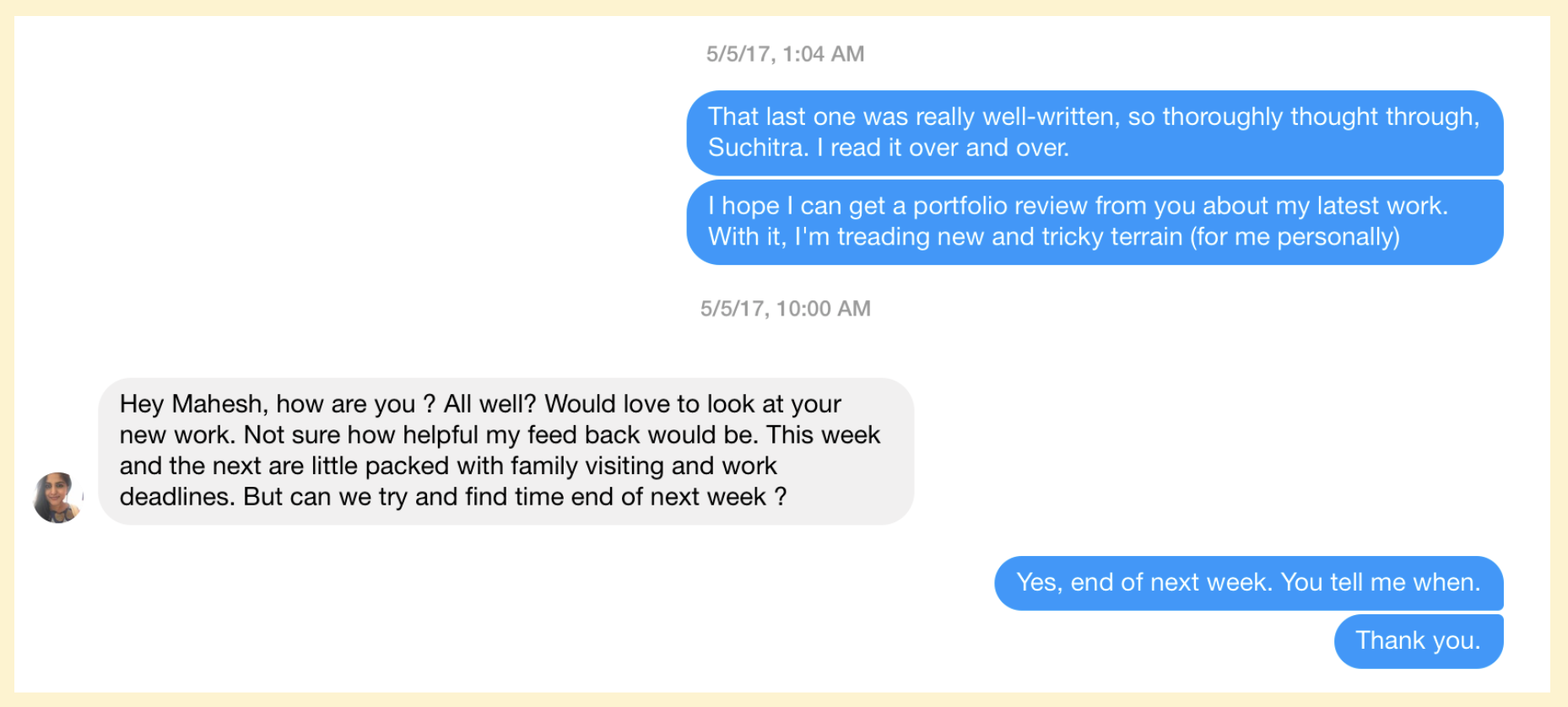
Instead of engaging in that discussion with sincerity, we now find ourselves here: a so-called deconstruction of my work that combines shallow research with a litany of complaints from every detractor whose path I’ve ever crossed. Suchitra claims wanting to bring ‘critical thinking to photography’ and ‘promote discussion around what constitutes appropriate behaviour’. The only ‘discussions’ I’ve seen online are potshots ranging from the vile to the vicious. Suchitra’s strategy—an effective one at that— rests on creating a caricature of my character through a multitude of sensational claims by extrapolating the truth and exaggerating untruths.
I fully expect a 20,000-word ‘autopsy’ to follow, expending a lot more energy in nit-picking everything I say in my defense and using that to garner sympathy, followers and donations to the polis project. I don’t know if I can put an end to her obsession in me, but I can surely write the full and proper explanation, as is due, and connect it to a broader discourse on photography and visual culture in India.
IV.
In Why Do Photography Critics Hate Photography? (Boston Review, 2008), an essay I find myself returning to frequently, the art critic Susie Linfield aligns the haters with “the forces of the most deplorable backwardness… with the frenzied crowds in Kabul and Karachi, Damascus and Tehran, who called for the execution of the Danish cartoonists… for, those demonstrators too, view images as an exploitation, an insult, a blasphemy, an act of subjugation.”
“Criticism demands of the critic a terrible nakedness,” wrote poet and critic Randall Jarrell in The Age of Criticism (1952): “… and yet he must regard [the] self as no more than the instrument through which the art is seen, so that the work of art will seem everything to him and his own self nothing.” To call the polis project art critics would be to further heap insult on art critics. Suchitra Vijayan and her crew demonstrably lack the intellectual honesty that is expected of art critics. With a take-no-prisoners approach, Suchitra weaponized critique to grab power in the online space. The polis project’s relationship with photography is defined more by contempt for the industry than by any affection for the medium. They are not so much cultural theorists as they are visual moralists. It is not clear with what credentials, other than blinding ideological pessimism. So they seek to ‘UN/DO Photography’ with clenched fist and sickle.
V.
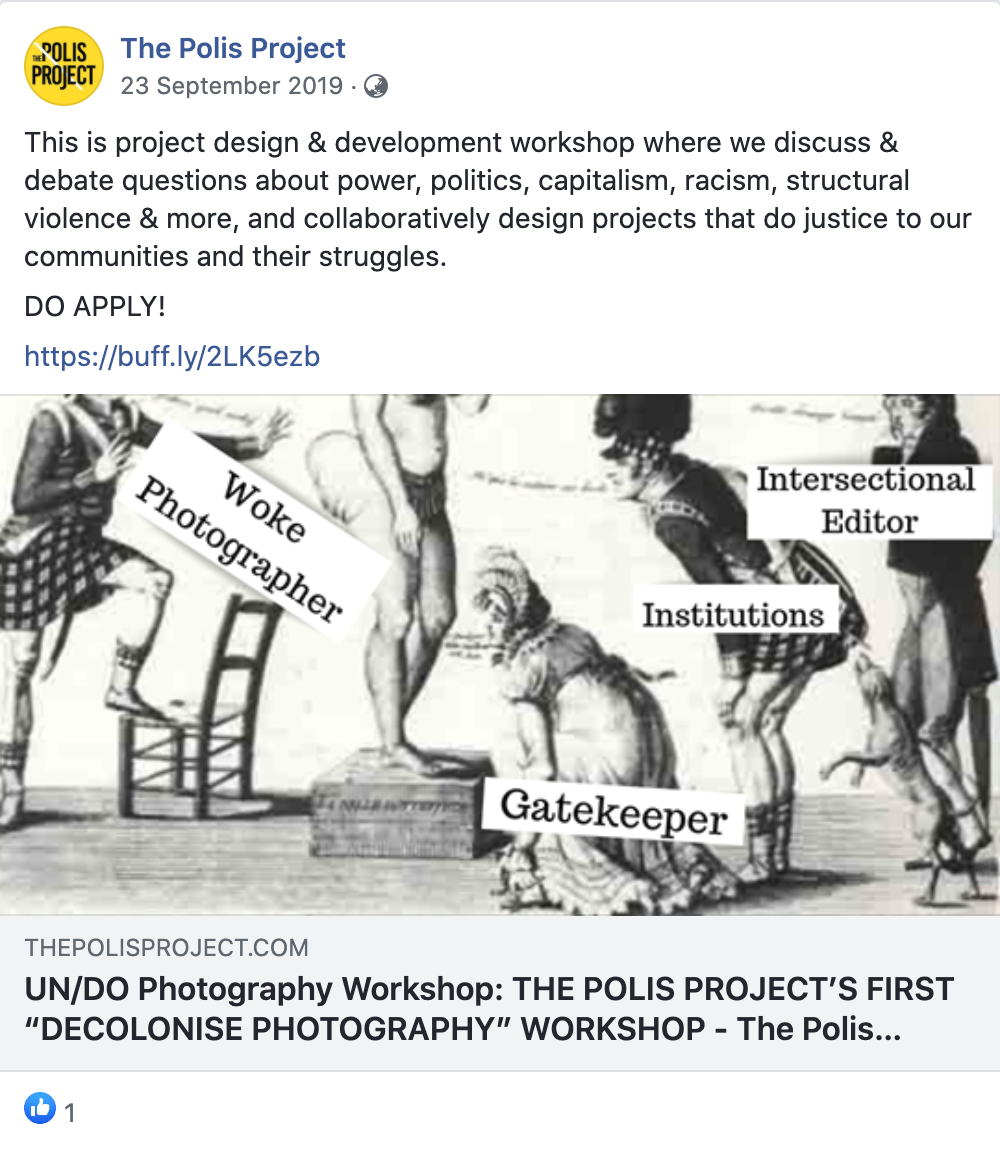
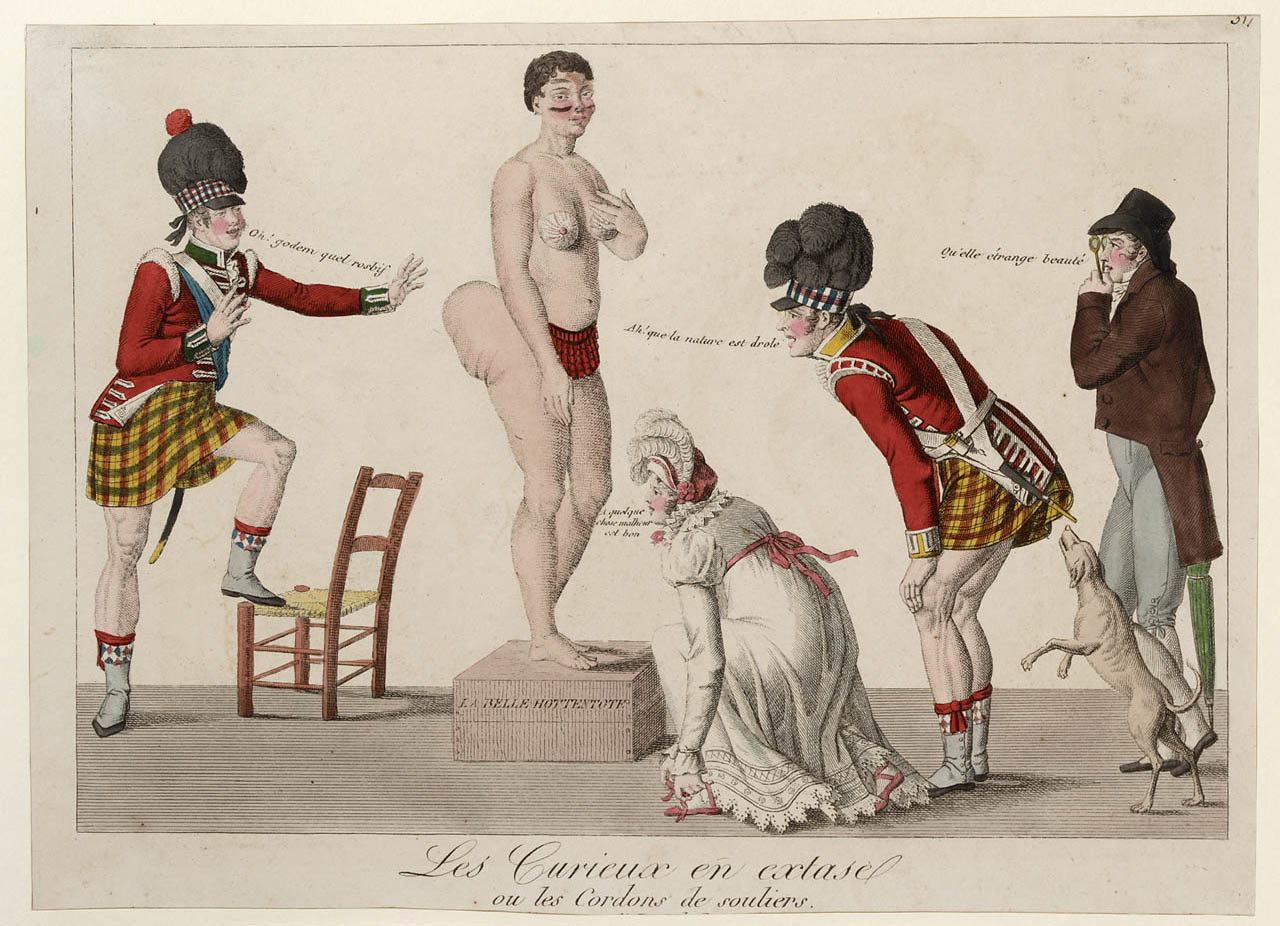
The heavily-publicised and free-to-participate UN/DO Photography Workshop raised sponsorship from the MurthyNAYAK Foundation, a Baltimore-Bangalore based NGO. The advertisement was a crass rendition of an already crass (though critical) 1814 artwork is indicative of the polis project’s contempt for the photo industry.
Remember 2019? It would be no exaggeration to say that was the darkest year in India’s modern history yet. A tragedy calendar so fully booked—Pulwama attack, Balakot strike, Modi II, Kashmir/370, anti-CAA protests, the Delhi riots—that the global onset of COVID-19 came as timely relief. In the moditrumpistan in which we find ourselves, what we need is more credible, bias-adjusted journalism. What we get instead is a new breed of antisocial media guerrillas who rue mainstream media’s loss of moral compass and propose themselves as the all-encompassing solution.
The polis project swiftly moved into that space, refashioning themselves as a ‘research and journalism organization’ and became shrill opinion shifters. They never amplified balanced, centrist voices except by way of ridicule. In a miserable year, Suchitra multiplied her personal cache of twitterati six-fold using the same divisive techniques as any far-right politician you can name, and then used this to raise funds for pet ventures like the UN/DO Photography Workshop. (Interestingly, throughout this period, the ‘racism and misogyny’ article remained a pinned post on Suchitra’s twitter. Talk about priorities.)
I came across an illuminating article in POLITICO about the Southern Poverty Law Centre and its controversial founder Morris Dees. The SPLC is a non-profit dedicated to fighting racism, discrimination, hate, and most notably, the Ku Klux Klan. What could possibly go wrong? (Read: <a href=https://www.politico.com/magazine/story/2017/06/28/morris-dees-splc-trump-southern-poverty-law-center-215312/” target=“_blank”>Has a Civil Rights Stalwart Lost Its Way?) The author Ben Schreckinger follows the money and writes in his detailed investigation, “In America, even fighting racism can be very good business.”
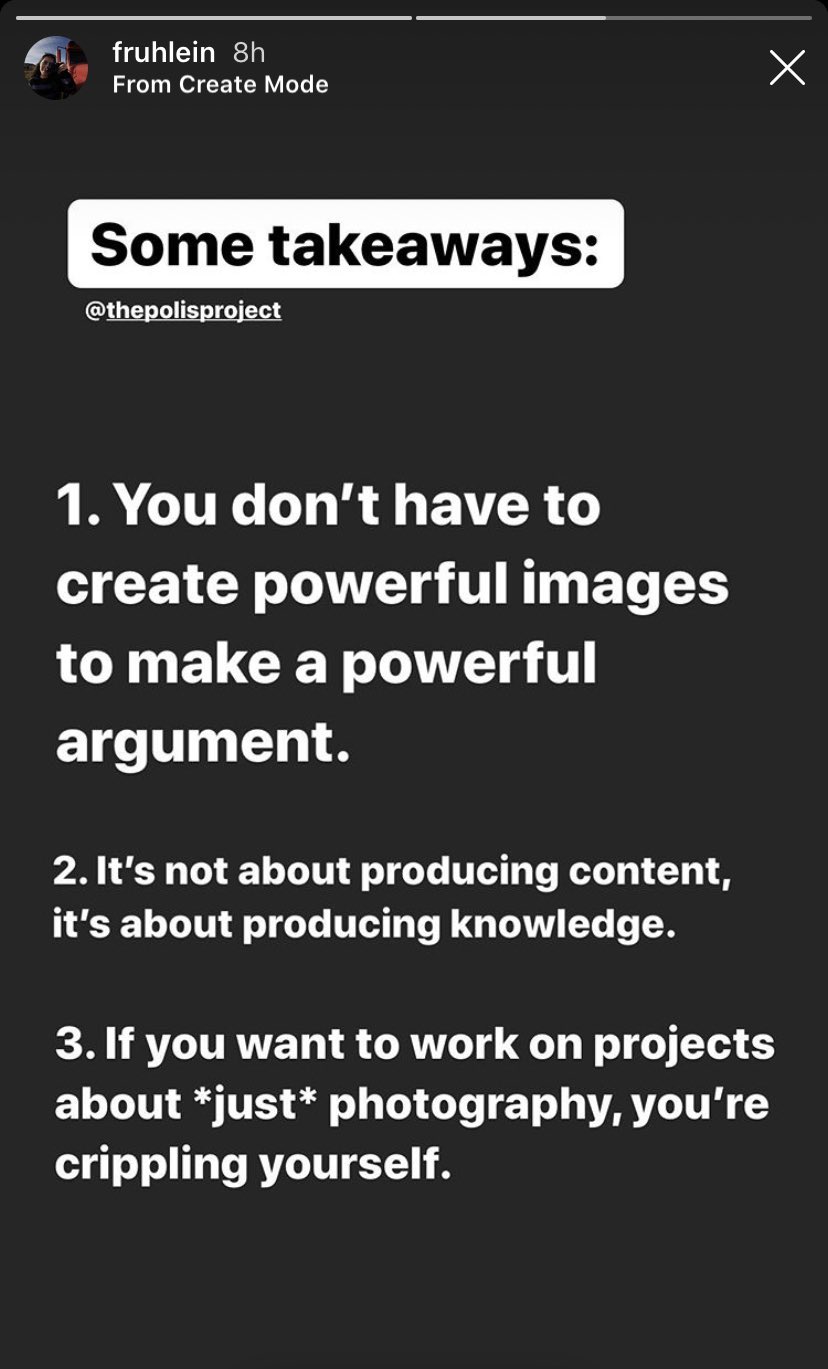
The heavily-publicised and free-to-participate UN/DO Photography Workshop sponsored by a Baltimore-Bangalore based NGO, the MurthyNAYAK Foundation was opaque about its details about what transpired during the event.
As a thought experiment, if one treats the SPLC and Dees as analogous to the polis project and Suchitra, the parallels between the two organizations are curiously striking. The polis project (and various other postmodern neoliberal projects born in the decade following the 2008 financial crisis) might be heading down a dangerous path of activist journalism. One of the SPLC’s innovations, for instance, is the Hate Map that tracks hate groups across the United States. A recent spate of misidentifications of people and groups prompted a closer look into its process and ideology. (The polis project too tried their hand at hate maps and came up with one that visualises gang rapes across India… by size of gang!)
VI.
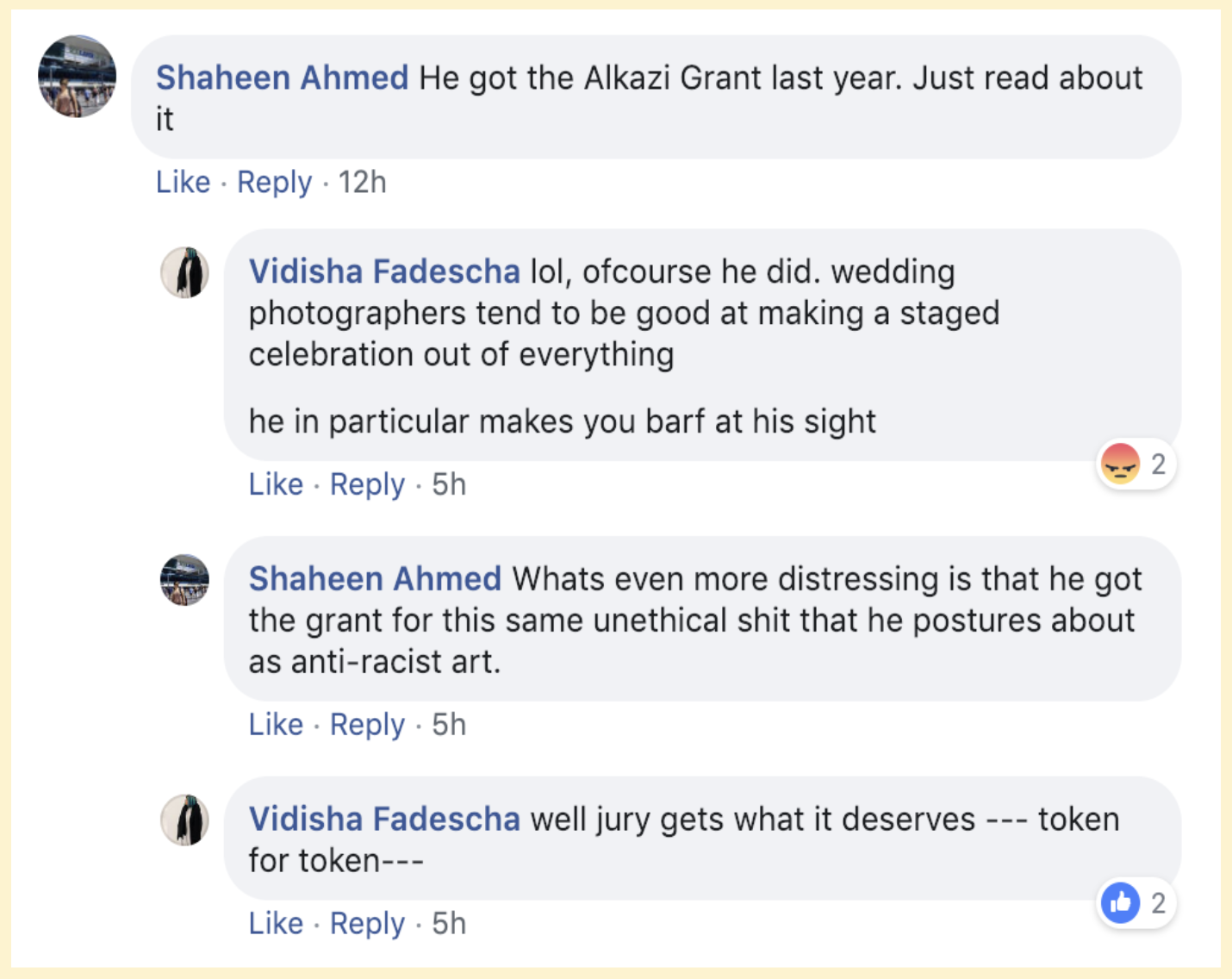
Instagram helpfully reminds me that nearly 104 weeks have passed since the anonymous accusations were floated on @herdsceneand. Accusation #1 turned out to be a misunderstanding at best and pettiness at worst. The Alkazi Foundation concluded as much after I shared transcripts of our chats following hours of interviews with their ‘investigation committee’. The Accuser later got invited to opportunities at the polis project: a podcast interview and a lecturing gig at the UN/DO Photography Workshop.
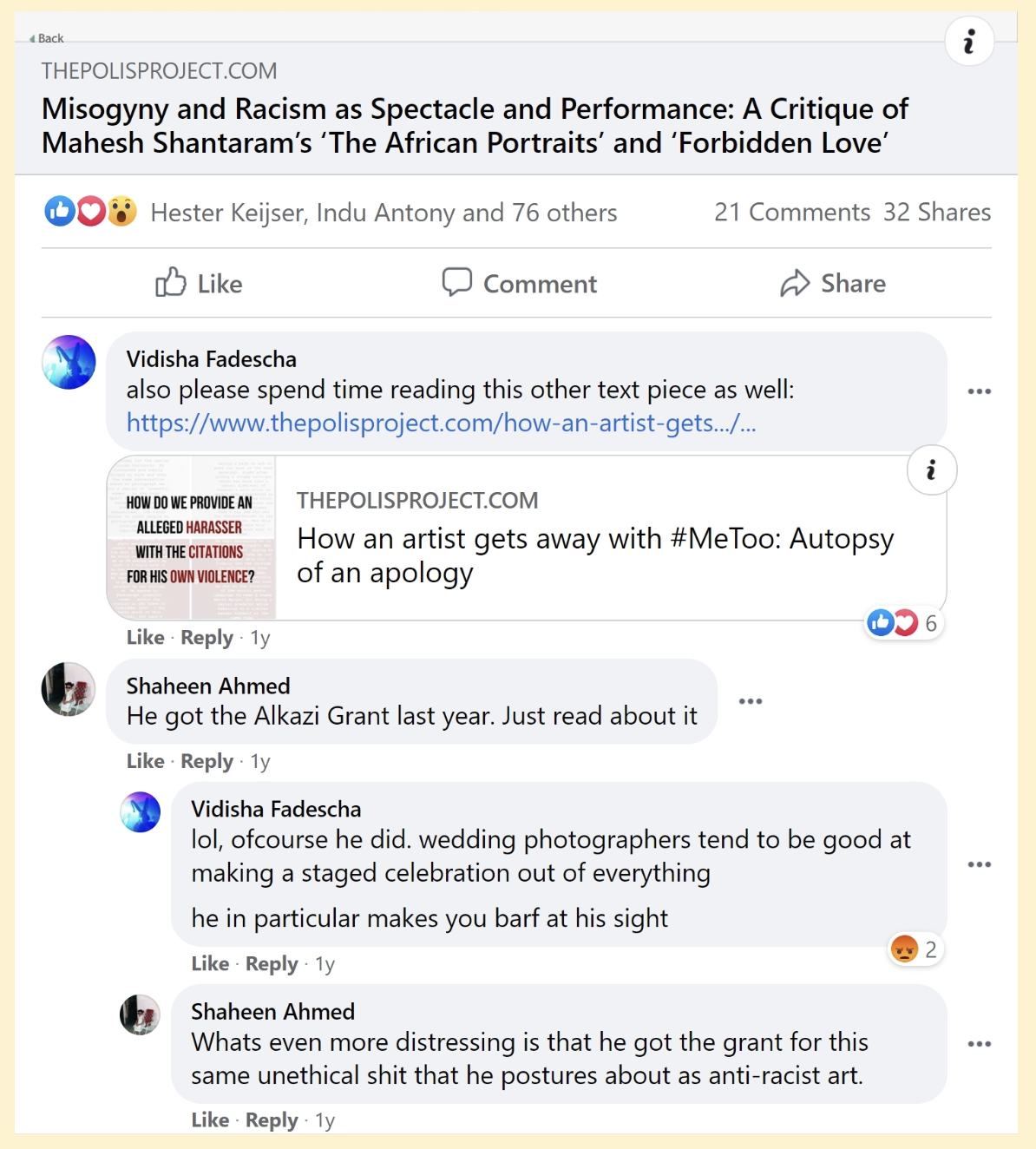
It was Accuser #2 who played a true masterstroke. How does one prove the non-occurrence of a moment that never occurred? This is the conundrum of the #metoo era. Any attempt at trying to find verity in this incident invariably leads to dead ends. The anonymous editors had offered to share details of ‘their process’. That never happened and my questions to them went unanswered. This double-layered shield of anonymity—designed to thwart any sincere attempt at restorative justice for either side—is what a Delhi high court judge referred to as “a ghost and a superghost” while hearing a lawsuit filed by an artist who was called out on the same blog five days after I was. That verdict, delivered in favour of the artist, was yet another milestone in India’s contentious track record with privacy and freedom of speech. (So much for cutting out BS and power play.)
It’s true what they say: 2020 brings clarity to hindsight. (Or something like that.) It only takes a snowflake to explain the destruction wrought by an avalanche. With no resolution in sight, I had to face a slew of 404 errors and emails that opened with a gut-wrenching ‘it has been brought to our attention that…’ So morally upright were the industry’s power brokers that even my offer to contribute prints for a COVID-19 relief fund was turned down. In all this, the Alkazi Foundation delivered a class act in face-saving of the institutional kind.
VII.
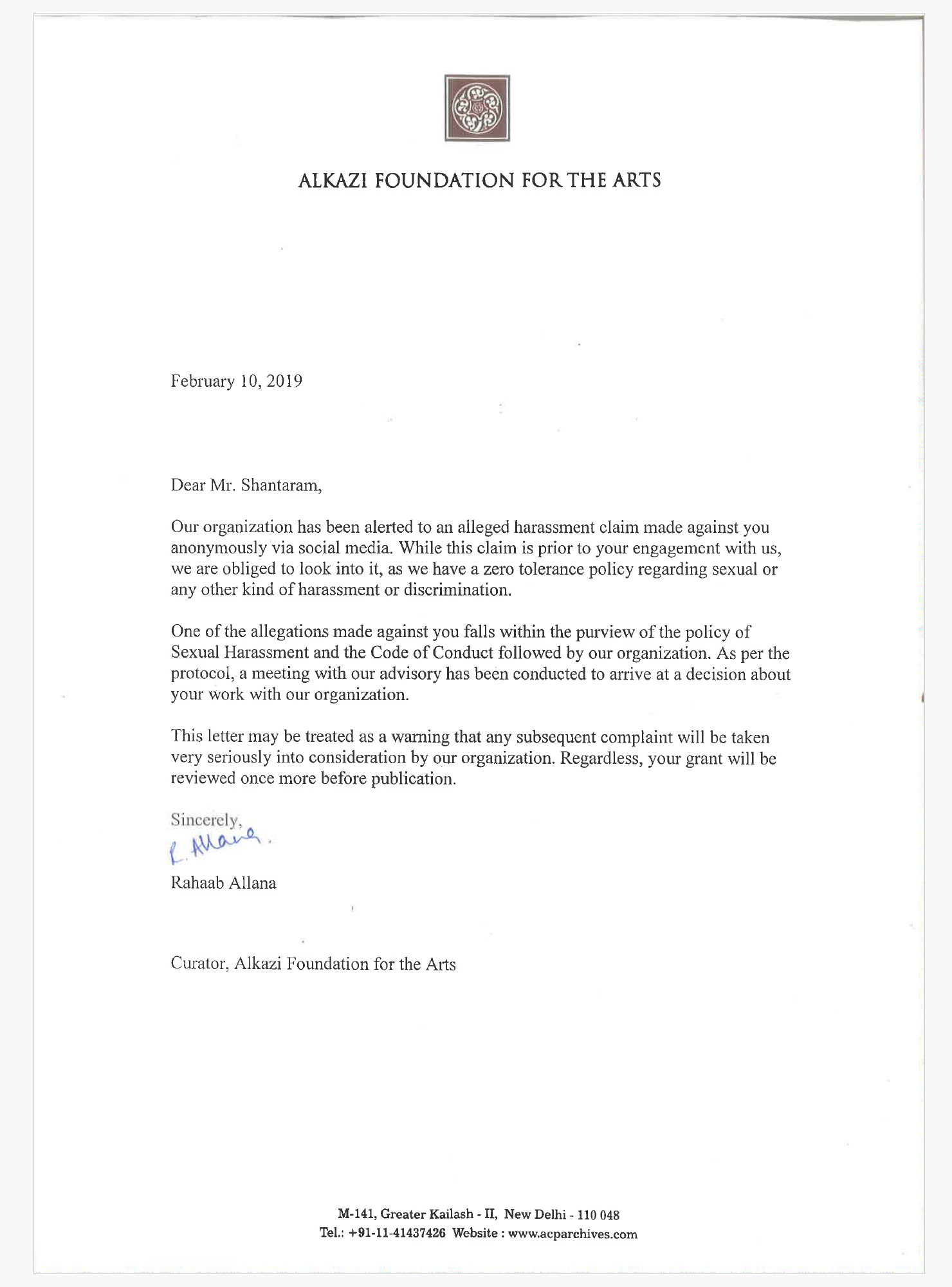
The Alkazi Foundation had awarded The African Portraits a prize, and so the reckoning was due. I was to speak to “Zuleikha from the office”—I did not know then she was Zuleikha Chaudhari, Rahaab’s own sister. I would tell them the whole truth and everything should then sort itself out, I naively believed. In his wisdom, the Foundation’s chief Rahaab Allana made no public statement about their findings, removed the jury’s comments from their website, set an unachievable task for me to get my grant money, took the year off in the hope of a blow over (“people do tend to take the polis project seriously these days…”), and came back in 2020 with a new grant cycle halved in value.
Inquiry done, I received a ‘letter of reprimand’ from Rahaab’s gmail id. While making some pretense of meeting the bare minimum in accordance with the POSH Act, the letter left several significant due process concerns. It remained intentionally vague, disclosing no specific allegations against me. There was no mention of having invited me to respond, provide evidence or be heard before the conclusion. Anonymous complaints were treated as sufficient basis for a decision without identifying or verifying the complainants. It is not clear how or why an incident that predates my engagement with the organization (as acknowledged in the letter) falls within their disciplinary authority. Lastly, linking my grant to an unverified, anonymous, pre-engagement allegation conflates a contractual relationship with a punitive one without due basis.
End.
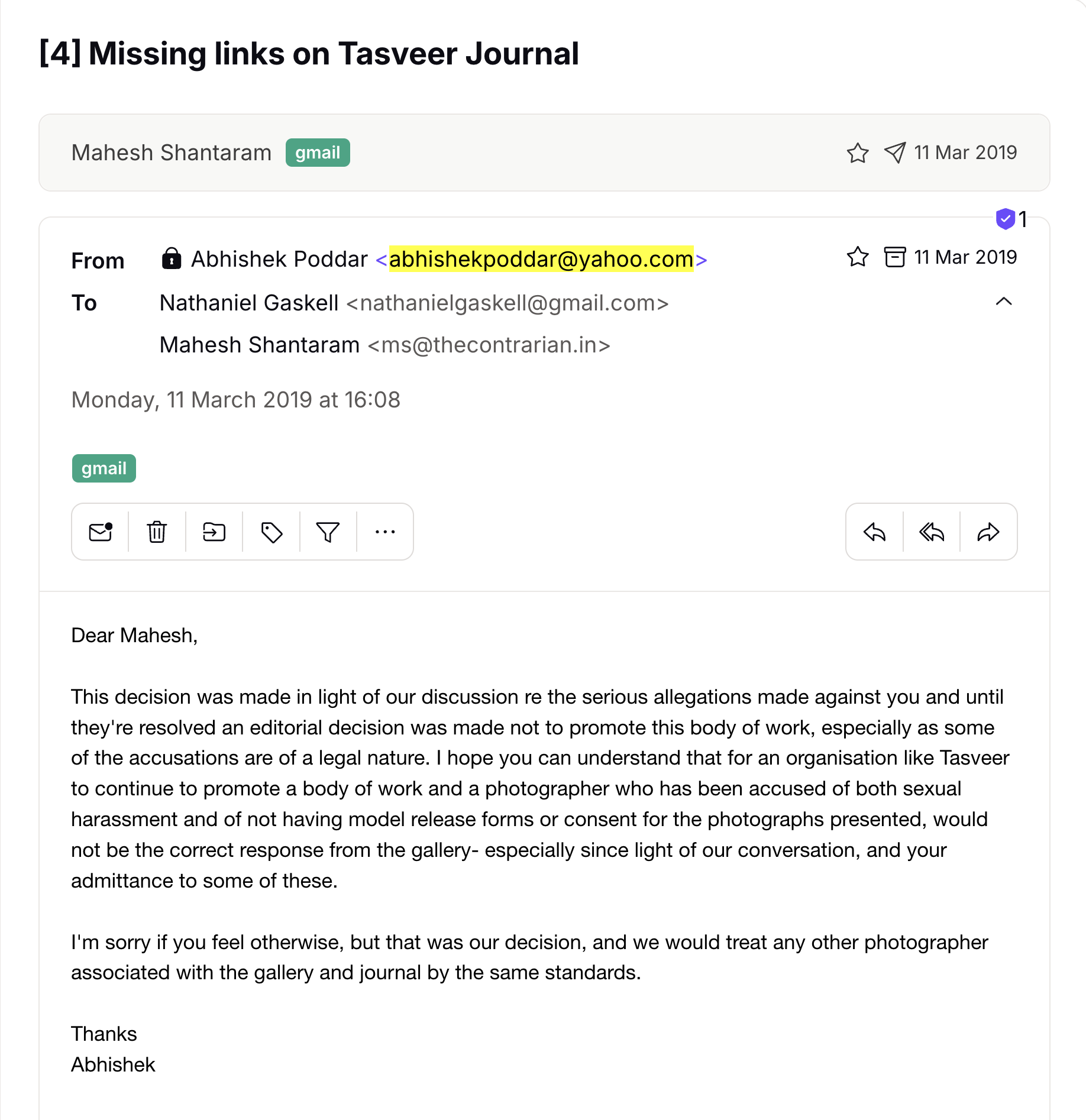
In the real world where photo industry professionals live and work, we would much rather prefer pluralistic debates where people are free to speak their minds knowing that they will be heard, not beaten into groupthink, and where the industry eventually comes out stronger than before. What we have instead is a B-grade remake of Bane instigating the people to storm Blackgate prison. In this wet dream for anarchy, Suchitra calls for “tearing down institutions” ostensibly because of their “tendency to conform and remain silent.” With the chilling effect setting in, institutions were torn down. They conformed, they remained silent.
-End-